Published on: 11-06-2021
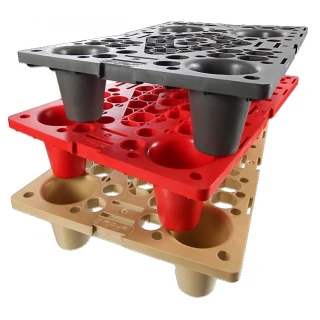
Distribution chains are increasingly using new pallet formats called display pallets to display products. Pallets of this type have already become standard in discount stores, and are now making their way into small- and large-format store chains.
There are many carriers available on the market, which are used to display products in a store establishment. From the most popular euro pallets to smaller format carriers. More and more retailers are seeing the potential in the use of display pallets, which are becoming an effective tool for increasing sales. Due to their size
(800 x 600 and
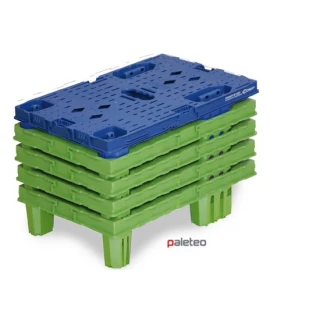
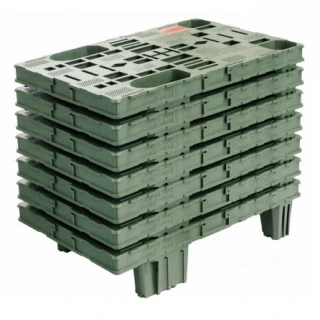
600 x 400 mm pallets), these types of pallets are successfully used to display products in the checkout area or in store aisles. Their size allows the use of small space in such a way that the positioning of the product on the pallet does not impede the movement of customers, without interfering with the shopping process. This ensures that the promotion area is maximized and allows for greater use of space.
The benefits of using display pallets are not only in terms of product display, which increases product visibility and brand recognition. Display pallets also optimize the logistics of supplying the store with goods. The replenishment process is carried out faster, with manual work minimized, which brings significant savings by minimizing costs.
The pallet gradually ceases to perform only its original function. It is not only used for transporting and protecting the packaged product from damage - it is becoming a platform for attractive product display at points of sale. Logistics, sales and marketing departments are facing new challenges for pallets - attracting customers' attention to the products displayed on the pallet, meeting environmental requirements, and increasing the functionality of the pallet.
In recent years, the distribution sector has experienced far-reaching transformations. In the average market, a buyer views items at a rate of 300 per minute. When we consider the fact that nearly 80% of purchases are made on impulse, it becomes apparent that aesthetic packaging plays a role similar to a major advertising investment. Thus, packaging not only plays a logistical role; it is also a means of communication. What's more, modern distribution requires standardization of systems, operational improvements, ensuring adequate security, and so on. In the area of palletizing goods, the answer to market requirements today is the display pallet, designed to reduce costs while increasing sales.
The traditional
pallets (1,200mm x 800mm), which have been used for decades to manufacture, store, transport and distribute goods, have today evolved into new sub-groups of formats. Today they are a powerful tool not only for logistics, but also for marketing and sales. Half pallets (pallets measuring 600mm x 800mm) and quarter pallets (pallets measuring 400mm x 600mm) are becoming the basis of palletizing systems. These formats are known as display pallets.
The challenges facing most manufacturers and distributors today involve the need to speed up distribution processes, increase control over the various links in the chain, and increase the scale of services to customers, which means ensuring adequate inventory levels while optimizing product management. Display pallets are an excellent tool for achieving these goals as they provide greater efficiency and less time-consuming process of in-store stocking. They allow, in the first place, to reduce the cost of warehouse operations (ease in identifying the product in the warehouse and shortening the time of product lining). In turn, they result in increased sales, as products handled with display pallets are better displayed.
Thus, display pallets make it possible to maximize retail space and promote sales and their ease of movement also increases the possibility of making modifications to the store area
Gallery