PALETEO.com | Warehouse equipment

Categories

Plastic Pallet Boxes for Fruits and Vegetables

Published on: 10-06-2021
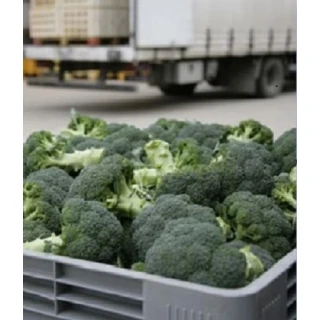
Since plastic has become a very common material that is used on a large scale in industry, people have also begun to look at crates differently, which are only seemingly an uncomplicated and undemanding product. However, it turns out that when it comes to storing and transporting food products, containers or crates are beginning to play an extremely momentous role here. Especially when it comes to storing vegetables and fruits, which require a lot of attention and care.

Freshness first and foremost
 
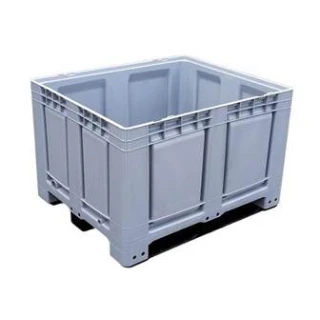
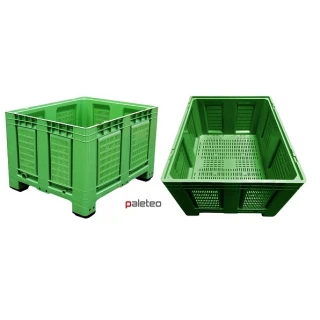
What characterizes high-quality crates is, first of all, the right conditions for storing vegetables and fruits. They are among the products that require constant care, due to the need to preserve freshness for as long as possible. Plastic boxes are therefore designed to provide them with this expected comfort associated with storage. Larger boxes are characterized by having feet that allow vegetables and fruits to have constant access to air, which preserves their freshness. Even if these products are stored stacked, they will not be smothered and deprived of access to air. Many plastic crates have ventilation holes, so that the transported products arrive at their destination fresh and intact.
 
 
High durability of crates
 
An undoubted advantage of plastic crates is also their resistance to mechanical damage. During transportation, it is difficult to avoid the crates from injury or abrasion. In the case of wooden pallets, used just a few years ago, they could be permanently damaged or would need to compensate for any defects that occurred. However, this always has the effect of destabilizing them, which has the consequence of damaging the products transported in them, all the more so since they are as delicate as vegetables and fruits.
 
 
Use of crates
 
Plastic crates are very functional and prove themselves for the needs of producers or wholesalers of fruits and vegetables. They are also quite a help for sellers of smaller or larger stores that retail these products. Certainly, smaller sizes of plastic crates equipped with ventilation holes will serve this purpose. You can also choose from a variety of their colors for segregating vegetables or fruits. Many of the available boxes can be folded at will, for saving storage space if they happen to be empty.
 
 
Why should you get plastic containers?
 
According to paleteo.pl specialists, "the growth of interest in plastic pallets has been observed continuously on the Polish market for more than 20 years. At present, the plastic pallet is becoming a standard in the European Union, as well as in Poland. This structure is successfully displacing its wooden predecessor from many sectors of the economy, as it is more attractive in many respects. The plastic pallet is more durable and easier to keep clean. It does not soak up moisture and does not need to be repaired and maintained every now and then."
Gallery
 skrzyniopaleta_plastikowa  skrzyniopalety_z_tworzywa_sztucznego  paleteo.pl

Other articles

  • Plastic parking grid KP4G 60 x 39.5 cm, load capacity 350 t/m²
    24-11-2026

    Which parking grid should you choose? Load capacity, dimensions and pieces per m²: table

    A parking grid is chosen primarily by the load it has to carry: for foot traffic and gardens, grids with a load capacity of approx. 150 t/m² (2.5–3 cm high) are sufficient; for driveways and car parks for passenger cars – 250–350 t/m² (4 cm high); for heavy traffic and the highest axle loads – 450 t/m² grids or 5 cm high models. Depending on the format, you need 2 to 7 grids per m² – the most popular 50 × 50 cm format means 4 pieces per m².

  • Plastic H1 pallet 120x80: pallet weight 18 kg
    17-11-2026

    How much does a pallet weigh? Euro, plastic and H1 pallet weights: table

    A wooden EPAL Euro pallet measuring 1200 × 800 mm weighs approximately 25 kg. A plastic pallet of the same size weighs, depending on its design, from approx. 4.5 kg (a lightweight open-deck export pallet) to approx. 20 kg (closed-deck, reinforced). A hygienic H1 pallet 120 × 80 weighs 18 kg, and 120 × 100 plastic pallets weigh from approx. 6.5 to 23 kg.

  • IBC heating jacket – 1000 l IBC container protected against frost
    10-11-2026

    IBC tank in winter: how to protect an IBC container from frost

    In winter, an IBC tank (1000 l IBC tote) must above all be protected against its contents freezing – water expands by about 9% when it turns to ice, which can crack the drain valve and damage the bottle. An IBC used for rainwater is best emptied before the frosts. An IBC holding process liquids should be stored in a heated building or wrapped in a thermal insulation jacket and – at sub-zero temperatures – a heating jacket with a thermostat.