Published on: 09-04-2025
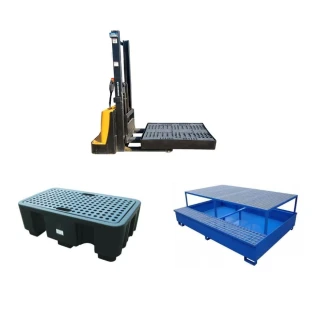
There is a wide range of sump trays available on the market to suit a variety of user needs and specific working conditions. Sump trays made of steel are distinguished by their exceptional durability and resistance to aggressive chemicals, making them ideal for use in harsh industrial environments. Their robustness and corrosion resistance are held in high regard. Polyethylene tubs have gained popularity due to their lightness and flexibility, making them much easier to transport and install. They are a great choice for storing liquids with lower densities and milder chemical compositions. Polyethylene, with its chemical resistance, is an excellent material for less demanding tub applications. Mobile tubs, on the other hand, are characterised by their ease of movement, which is invaluable in dynamic workplaces. They allow the work space to be managed freely and to be quickly repositioned according to current operational needs. Flexible tubs, on the other hand, are able to adapt to the various shapes and sizes of storage space. They allow you to react quickly to changing working conditions and make efficient use of the available space.
Each type of sump tray offers its own unique advantages,
allowing users to select the most appropriate solution to suit their individual requirements,
to their individual requirements.
What are the differences between steel and polyethylene sump trays?
Sump trays made of steel are characterised by their durability due to their resistance to mechanical damage. This makes them an excellent choice for areas where they are used intensively. However, their weight can be problematic, plus they do not always perform well in contact with certain chemicals.
Polyethylene tubs, on the other hand, are distinguished by their light weight, which makes them much easier to transport and install. Their excellent resistance to various chemicals makes them ideal for storing aggressive materials such as acids or solvents.
The decision on the choice of material usually depends on the specific application and the requirements for both chemical and mechanical resistance.
What are the differences between low-profile and high-profile tubs?
Low-profile and high-profile baths differ mainly in their design and application.
The compact dimensions allow easy placement in areas with limited space,
the low profile facilitates the loading and unloading process,
practical in smaller warehouses or workshops.
High-profile trays, on the other hand, are characterised by a larger capacity, allowing more hazardous materials to be stored at the same time.
Ideal for storing large containers of chemicals,
higher walls can make access difficult,
the decision should depend on the individual needs of the user and the spatial conditions of the workplace.
What are the benefits of using mobile sump trays?
Mobile sump trays offer many benefits to industry due to their versatility and practicality. They enable substances to be easily moved around the site, which becomes invaluable in dynamic working conditions. They allow rapid response to spills and adapt the site of use to current needs, minimising the risk of contamination and increasing safety. With these devices, the risks associated with the storage of hazardous chemicals can be effectively managed. They provide better control over emergency situations, reducing potential environmental and financial damage. Their mobility also allows optimum use of working space through rapid relocation in line with operational requirements.
they support efficient internal logistics planning thanks to their ease of transportation,
make it possible to comply with legal requirements regarding environmental protection,
ensure work safety without the need to invest in permanent security systems,
are particularly valuable in situations requiring an immediate response to spills,
support the effective management of hazardous materials and raise the standard of occupational safety.
These solutions are particularly valuable where immediate response to spills is required or where production or storage conditions change frequently. They support the effective management of hazardous materials and raise the overall standard of occupational safety in various industrial sectors.
See also in our shop: Sorbents – Mats, Granular, Socks · Spill pallets and containment sumps · Industrial plastic tanks
Gallery