Published on: 17-09-2024
Although wooden pallet extensions have been the standard over the years, more and more companies are opting for a plastic alternative. Why? Here are some key reasons why you should consider this modern option.
What are plastic pallet extensions?
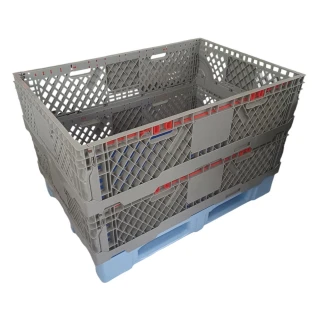
Pallet extensions, also known as pallet boxes, are additional structures fitted to standard pallets. They create stable and secure walls that allow products of different sizes and shapes to be stored on a pallet. The plastic version differs from the wooden version primarily in terms of the material used - plastic extensions are lightweight, moisture-resistant and durable.
Advantages of plastic pallet racks
Durability and strength
Plastic pallet racks are characterised by high resistance to mechanical damage and weather conditions. Unlike wood, plastic will not rot, crack or be affected by moisture, making them ideal for outdoor and indoor storage.
Lightweight
Plastics are lighter than wood, which reduces the weight of the entire structure. This not only makes the pallets easier to transport and manipulate, but also reduces energy consumption when transporting goods, resulting in financial and environmental savings.
Easy to clean
Unlike wood, plastic extensions can be easily cleaned. In industries where hygiene is key - such as the food or pharmaceutical industries - this is an invaluable advantage. Plastic lids are resistant to moisture, mould and other contaminants, which minimises the risk of product contamination.
Eco-friendliness
Although plastic is often associated with a negative impact on the environment, pallet racks made from this material can be reused many times over the years, reducing waste generation. Many models are also made from recycled materials, further reducing their environmental footprint.
Modularity and flexibility
Plastic extensions are often designed in a modular manner, allowing the height of the pallet box to be adapted to suit current needs. The ability to easily assemble and disassemble the extensions makes them extremely practical, especially in dynamic warehouse environments.
Resistance to external factors
Plastic extensions are resistant to moisture, chemicals and UV radiation, making them ideal for harsh storage or transport environments. Unlike wood, which can crack, soak up water or be exposed to pests, plastic retains its properties for a long time.
Applications for plastic pallet racks
Food and pharmaceutical industry
In these industries, it is crucial to maintain high standards of hygiene. Plastic pallet racks, which can be easily disinfected, are the perfect solution here. The use of plastics minimises the risk of contamination, which is particularly important when transporting and storing food or medical products.
Logistics and storage
Plastic racks are invaluable in the logistics sector, where efficient management of storage space and the safety of the goods being transported are important. Thanks to their modularity and easy stacking, the racks allow optimum use of pallet space.
Automotive industry
In the automotive industry, where delicate and precise parts are often stored and transported, stable and durable plastic racks provide protection against damage during transport.
Is it worth investing in plastic pallet collars?
Choosing plastic pallet collars is an investment that can bring many benefits to a company - from cost savings to improved logistics efficiency to greater environmental protection. They are more durable, lighter, easier to clean and more flexible than their wooden counterparts. As a result, companies can optimise their warehousing and transport processes, while taking care of the environment and the safety of stored goods.
In summary, plastic pallet extensions are a modern, efficient and environmentally friendly solution that is used in a variety of industries. It is worth considering their implementation in companies that are looking for innovative methods to streamline their logistics processes.
See also in our shop: Plastic Pallet Collars – Folding · Pallet collars — plastic, wooden and metal · Plastic pallets
Gallery