PALETEO.com | Warehouse equipment

Categories

Packaging pooling: an effective logistics management strategy

Published on: 08-08-2024

What is packaging pooling?
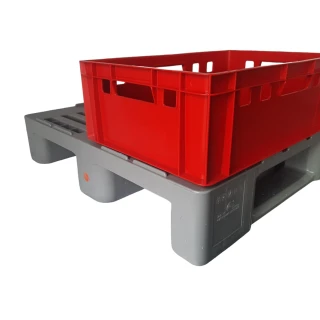
Packaging pooling is a reusable packaging management system in which companies share packaging assets such as pallets, containers, crates or bins. Instead of each company owning and managing its own packaging, they use a common pool that is managed by a specialist pooling provider.
 
How does packaging pooling work?
Resource sharing: Companies that opt for packaging pooling bring their packaging into the system or rent it from the pooling provider.
Logistics and management: The pooling provider manages all logistics related to packaging - distribution, maintenance, cleaning and repairs.
Returns and rotation: The packaging is rotated between the different users according to their needs. After use, the packaging is returned to the service centre, where it is prepared for the next use.
 
Benefits of packaging pooling
Cost reduction: By pooling packaging, companies can significantly reduce the costs of purchasing, maintaining and managing their own packaging.
Sustainability: Packaging pooling supports a green approach to business, as reusable packaging reduces packaging waste and CO2 emissions associated with the production of new packaging.
Storage space optimisation: The use of shared packaging eliminates the need for large packaging storage spaces, allowing companies to make better use of available space.
Flexibility: packaging pooling allows companies to flexibly manage their packaging requirements in line with changing market conditions and seasonality.
 
Examples of packaging pooling applications
Food industry: Companies that produce and distribute food often use box and container pooling to ensure the safe and hygienic transportation of products.
Automotive: Automotive parts manufacturers use pooled containers and pallets to optimise logistics for deliveries to assembly factories.
Retail: Retailers use pallet pooling to efficiently manage the delivery of goods to shops and minimise transport costs.
Pallet pooling is an effective strategy with numerous benefits, such as cost reduction, supporting sustainability, optimising storage space and operational flexibility. Despite some challenges in its implementation, more and more companies are seeing the potential of this solution and choosing to implement it in their logistics processes. In an era of growing environmental awareness and the need to optimise costs, packaging pooling is becoming not only an attractive but even a necessary option for modern companies.

See also in our shop: Plastic pallets · Plastic box pallets
Gallery
 Packaging pooling: an effective logistics management strategy

Other articles

  • Plastic parking grid KP4G 60 x 39.5 cm, load capacity 350 t/m²
    24-11-2026

    Which parking grid should you choose? Load capacity, dimensions and pieces per m²: table

    A parking grid is chosen primarily by the load it has to carry: for foot traffic and gardens, grids with a load capacity of approx. 150 t/m² (2.5–3 cm high) are sufficient; for driveways and car parks for passenger cars – 250–350 t/m² (4 cm high); for heavy traffic and the highest axle loads – 450 t/m² grids or 5 cm high models. Depending on the format, you need 2 to 7 grids per m² – the most popular 50 × 50 cm format means 4 pieces per m².

  • Plastic H1 pallet 120x80: pallet weight 18 kg
    17-11-2026

    How much does a pallet weigh? Euro, plastic and H1 pallet weights: table

    A wooden EPAL Euro pallet measuring 1200 × 800 mm weighs approximately 25 kg. A plastic pallet of the same size weighs, depending on its design, from approx. 4.5 kg (a lightweight open-deck export pallet) to approx. 20 kg (closed-deck, reinforced). A hygienic H1 pallet 120 × 80 weighs 18 kg, and 120 × 100 plastic pallets weigh from approx. 6.5 to 23 kg.

  • IBC heating jacket – 1000 l IBC container protected against frost
    10-11-2026

    IBC tank in winter: how to protect an IBC container from frost

    In winter, an IBC tank (1000 l IBC tote) must above all be protected against its contents freezing – water expands by about 9% when it turns to ice, which can crack the drain valve and damage the bottle. An IBC used for rainwater is best emptied before the frosts. An IBC holding process liquids should be stored in a heated building or wrapped in a thermal insulation jacket and – at sub-zero temperatures – a heating jacket with a thermostat.

