PALETEO.com | Warehouse equipment

Categories

Plastic Mesh Crates: The Perfect Solution for Storing Vegetables and Fruits

Published on: 11-01-2024

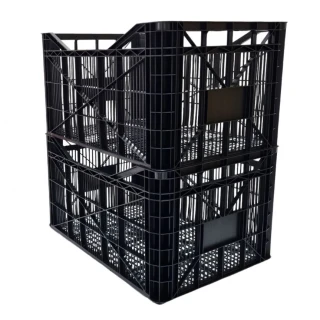
More and more people are realizing the health benefits of eating fresh fruits and vegetables. There is a growing demand for effective and practical solutions for storing them. One option that is gaining popularity is openwork plastic boxes, specially designed to preserve the freshness and quality of vegetables and fruits.

1 Ensuring optimal ventilation:
Openwork boxes are characterized by perforated walls and bottoms, allowing air to flow freely. This is a key element in maintaining adequate humidity and avoiding the accumulation of excess water vapor, which can accelerate rotting and molding processes. As a result, vegetables and fruits stored in such boxes retain their freshness and flavor longer.

2 Protection from moisture:
Traditional closed containers can promote moisture buildup, which encourages mold and bacteria growth. Openwork plastic crates can effectively eliminate this problem by helping to maintain a proper moisture balance. As a result, vegetables and fruits not only stay fresh longer, but also do not lose their nutritional value.

3 Transparency for easier inventory management:
Many manufacturers offer boxes made of transparent plastic, which makes it easy to monitor the contents. With this feature, it's easier to control the amount of stored fruits and vegetables and plan their consumption. This also helps avoid forgetting certain products, which can lead to wastage.

4 Ease of cleaning:
Plastic boxes are easy to keep clean, which is important for maintaining the hygiene of stored foods. Just wash them with water and mild detergent, and they are ready to be used again. This is definitely a more hygienic solution than some traditional baskets or pouches, which are more difficult to clean.

5 Use in long-term storage:
Openwork boxes work well not only in home refrigerators, but also in larger-scale vegetable and fruit storage. Thanks to them, producers can manage storage and transportation more efficiently, while maintaining the quality of their products.

In conclusion, plastic openwork boxes are an innovative and effective solution for storing fruits and vegetables. They provide optimal ventilation, protect against moisture, facilitate inventory management and are easy to keep clean. They are an excellent way to prolong the freshness and taste of your favorite foods, both at home and on a larger scale.

Check out our offer:
plastic containers
 
Gallery
 skrzynki-ażurowe

Other articles

  • Plastic parking grid KP4G 60 x 39.5 cm, load capacity 350 t/m²
    24-11-2026

    Which parking grid should you choose? Load capacity, dimensions and pieces per m²: table

    A parking grid is chosen primarily by the load it has to carry: for foot traffic and gardens, grids with a load capacity of approx. 150 t/m² (2.5–3 cm high) are sufficient; for driveways and car parks for passenger cars – 250–350 t/m² (4 cm high); for heavy traffic and the highest axle loads – 450 t/m² grids or 5 cm high models. Depending on the format, you need 2 to 7 grids per m² – the most popular 50 × 50 cm format means 4 pieces per m².

  • Plastic H1 pallet 120x80: pallet weight 18 kg
    17-11-2026

    How much does a pallet weigh? Euro, plastic and H1 pallet weights: table

    A wooden EPAL Euro pallet measuring 1200 × 800 mm weighs approximately 25 kg. A plastic pallet of the same size weighs, depending on its design, from approx. 4.5 kg (a lightweight open-deck export pallet) to approx. 20 kg (closed-deck, reinforced). A hygienic H1 pallet 120 × 80 weighs 18 kg, and 120 × 100 plastic pallets weigh from approx. 6.5 to 23 kg.

  • IBC heating jacket – 1000 l IBC container protected against frost
    10-11-2026

    IBC tank in winter: how to protect an IBC container from frost

    In winter, an IBC tank (1000 l IBC tote) must above all be protected against its contents freezing – water expands by about 9% when it turns to ice, which can crack the drain valve and damage the bottle. An IBC used for rainwater is best emptied before the frosts. An IBC holding process liquids should be stored in a heated building or wrapped in a thermal insulation jacket and – at sub-zero temperatures – a heating jacket with a thermostat.

