
Plastic Pallet Boxes: An Environmentally Friendly Choice
Published on: 03-10-2023
Durability and strength
Plastic crates, especially those made of high-quality materials, are extremely durable and long-lasting. Plastics, such as polypropylene (PP) and polyethylene (PE), are resistant to weather, moisture and corrosion. They do not deteriorate, even when exposed to rain, snow or sun, making them ideal for storing and transporting goods outdoors. In addition, they don't rot or disintegrate like their wooden counterparts, allowing them to be used again and again.
Low cost of operation
One of the key advantages of plastic boxes is their low cost of operation in the long term. While they may initially be more expensive than traditional wooden crates, their durability and resistance to damage mean they don't need to be replaced as often. This reduces the cost of purchasing and maintaining a pallet inventory. In addition, plastic crates are easy to keep clean, eliminating the costs associated with painting and maintenance.
Environmentally friendly
Nowadays, more and more attention is being paid to ecology and sustainability. Plastic box pallets, especially those made from recycled and recyclable materials, are more environmentally friendly than wooden pallets. The production of wooden pallets requires cutting down trees, which contributes to deforestation and the loss of valuable natural resources. Plastic pallet boxes, on the other hand, can be fully recycled, which helps reduce waste and negative environmental impact.
Ease of handling
Plastic crate pallets are usually lightweight and easy to handle, making it easier for warehouse personnel and drivers. They require no special maintenance or upkeep work, such as removing splinters or nails from these wooden ones. In addition, plastic boxes are often equipped with ergonomic handles or openings, making them easy to carry and load.
Multifunctionality
Plastic box pallets are available in a variety of sizes and configurations. They can be customized to meet specific needs, making them ideal for transporting a variety of goods. Some models have built-in systems to prevent cargo from slipping, increasing safety during transport. In addition, plastic box pallets can be used both indoors and outdoors, adding to their versatility.
Plastic box pallets are becoming increasingly popular in logistics and transportation due to their durability, low operating cost, environmental friendliness, ease of use and multifunctionality. While they may be slightly more expensive than traditional wooden pallets to begin with, their longevity and environmental benefits make them a worthwhile investment for companies in the logistics industry. Consider switching to plastic crates to gain a competitive advantage and contribute to environmental protection.
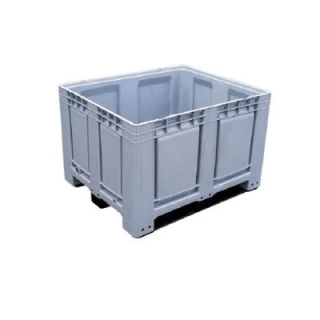
Check out our crate pallets:
plastic crates
Other articles
-

24-11-2026 Which parking grid should you choose? Load capacity, dimensions and pieces per m²: table
A parking grid is chosen primarily by the load it has to carry: for foot traffic and gardens, grids with a load capacity of approx. 150 t/m² (2.5–3 cm high) are sufficient; for driveways and car parks for passenger cars – 250–350 t/m² (4 cm high); for heavy traffic and the highest axle loads – 450 t/m² grids or 5 cm high models. Depending on the format, you need 2 to 7 grids per m² – the most popular 50 × 50 cm format means 4 pieces per m².
-

17-11-2026 How much does a pallet weigh? Euro, plastic and H1 pallet weights: table
A wooden EPAL Euro pallet measuring 1200 × 800 mm weighs approximately 25 kg. A plastic pallet of the same size weighs, depending on its design, from approx. 4.5 kg (a lightweight open-deck export pallet) to approx. 20 kg (closed-deck, reinforced). A hygienic H1 pallet 120 × 80 weighs 18 kg, and 120 × 100 plastic pallets weigh from approx. 6.5 to 23 kg.
-

10-11-2026 IBC tank in winter: how to protect an IBC container from frost
In winter, an IBC tank (1000 l IBC tote) must above all be protected against its contents freezing – water expands by about 9% when it turns to ice, which can crack the drain valve and damage the bottle. An IBC used for rainwater is best emptied before the frosts. An IBC holding process liquids should be stored in a heated building or wrapped in a thermal insulation jacket and – at sub-zero temperatures – a heating jacket with a thermostat.