PALETEO.com | Warehouse equipment

Categories

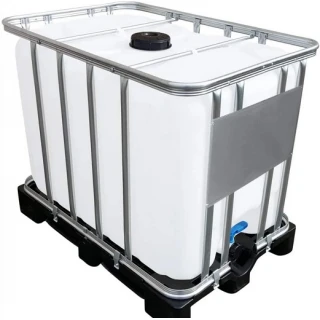
IBC containers are a practical and interesting solution.

Published on: 27-06-2023

Logistics is a field that constantly presents us with challenges. Whether we manage a warehouse, transport chemicals, or operate in the agricultural industry, storing and transporting large quantities of liquids can be a real challenge. But did you know that there is a highly practical solution in this field? Allow me to introduce the star of the logistics world - IBC containers!
These unassuming yet incredibly functional containers, also known as Intermediate Bulk Containers, surprise with their versatility and innovative solutions. Did you know that IBC containers can hold up to 1000 liters of liquid? That's truly impressive. With such capacity, it becomes possible to store and transport larger quantities of substances such as chemicals, oils, liquid fertilizers, or even water. This means that IBC containers become an indispensable companion in various industries, delivering reliable logistical solutions.
What else sets these containers apart? Their construction is designed to provide maximum safety and durability. Made from sturdy materials such as high-quality plastics, they protect against leaks and damages, which is crucial when storing and transporting hazardous substances. Additionally, IBC containers are equipped with special valves that allow controlled dispensing of the contents. It's simply pure logistical magic!
However, the innovation of IBC containers doesn't stop there. These containers can be easily moved using a forklift. They can also be successfully integrated into water treatment and recovery systems or for other substances. This not only facilitates daily logistical operations but also contributes to sustainable development and environmental protection.
Now, imagine these IBC containers as true stars on the logistics stage. With their versatility, reliability, and capabilities, they attract attention and become an integral part of the success of companies in the logistics field. If you're looking for a solution that not only meets your logistical expectations, IBC containers are the perfect choice. Discover how these containers can revolutionize your logistical processes and make your company even more efficient.
Join the logistical revolution and reach for IBC containers.

See also in our shop: IBC containers · Industrial plastic tanks
Gallery
 kontenery_IBC

Other articles

  • Plastic parking grid KP4G 60 x 39.5 cm, load capacity 350 t/m²
    24-11-2026

    Which parking grid should you choose? Load capacity, dimensions and pieces per m²: table

    A parking grid is chosen primarily by the load it has to carry: for foot traffic and gardens, grids with a load capacity of approx. 150 t/m² (2.5–3 cm high) are sufficient; for driveways and car parks for passenger cars – 250–350 t/m² (4 cm high); for heavy traffic and the highest axle loads – 450 t/m² grids or 5 cm high models. Depending on the format, you need 2 to 7 grids per m² – the most popular 50 × 50 cm format means 4 pieces per m².

  • Plastic H1 pallet 120x80: pallet weight 18 kg
    17-11-2026

    How much does a pallet weigh? Euro, plastic and H1 pallet weights: table

    A wooden EPAL Euro pallet measuring 1200 × 800 mm weighs approximately 25 kg. A plastic pallet of the same size weighs, depending on its design, from approx. 4.5 kg (a lightweight open-deck export pallet) to approx. 20 kg (closed-deck, reinforced). A hygienic H1 pallet 120 × 80 weighs 18 kg, and 120 × 100 plastic pallets weigh from approx. 6.5 to 23 kg.

  • IBC heating jacket – 1000 l IBC container protected against frost
    10-11-2026

    IBC tank in winter: how to protect an IBC container from frost

    In winter, an IBC tank (1000 l IBC tote) must above all be protected against its contents freezing – water expands by about 9% when it turns to ice, which can crack the drain valve and damage the bottle. An IBC used for rainwater is best emptied before the frosts. An IBC holding process liquids should be stored in a heated building or wrapped in a thermal insulation jacket and – at sub-zero temperatures – a heating jacket with a thermostat.

