PALETEO.com | Warehouse equipment

Categories

Rainwater Tank – Why It's Worth Buying and How to Use It

Published on: 06-04-2023

Rainwater is a natural resource that is worth using in everyday life. By collecting it, we can reduce our consumption of drinking water and reduce our water bills. What's more, using rainwater is more environmentally friendly and economical because this water is free and natural.
Harvesting rainwater is an easy and effective way to have a supply for domestic needs. Rainwater can be used for watering plants, washing the car, flushing the toilet or washing clothes. Saving drinking water is a benefit not only for our wallets, but also for the environment. Drinking water is a resource that requires a lot of energy and money to treat and deliver to our homes. Therefore, using alternative water sources is a good choice for us and for the environment.
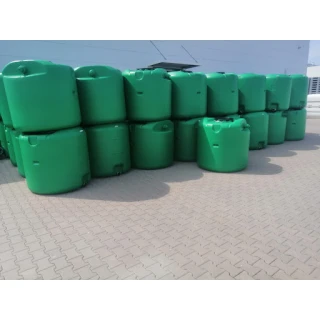
Buying a rainwater tank is an investment that will allow you to collect more rainwater and allows you to use it all year round. A rainwater tank allows you to store water for future use. It is worth choosing rainwater tanks made of durable and corrosion-resistant materials to protect the water from contamination and loss of quality. This way, we will have access to clean water at any time of the year.
When buying a rainwater tank, it is worth paying attention to its capacity and dimensions. The choice of tank capacity depends on our needs and the size of the area from which we collect water. Rainwater tanks available on the market vary in capacity from 100 to as much as 10,000 liters. It is important that the tank is easy to install and use.
The advantages of using a rainwater tank include not only saving drinking water and money, but also environmental benefits. Rainwater harvesting contributes to reducing the need for drinking water and reduces the environmental impact associated with water production and distribution.
 

See also in our shop: Rainwater tanks · Industrial plastic tanks
Gallery
 zbiornik-na-deszczówkę

Other articles

  • Plastic parking grid KP4G 60 x 39.5 cm, load capacity 350 t/m²
    24-11-2026

    Which parking grid should you choose? Load capacity, dimensions and pieces per m²: table

    A parking grid is chosen primarily by the load it has to carry: for foot traffic and gardens, grids with a load capacity of approx. 150 t/m² (2.5–3 cm high) are sufficient; for driveways and car parks for passenger cars – 250–350 t/m² (4 cm high); for heavy traffic and the highest axle loads – 450 t/m² grids or 5 cm high models. Depending on the format, you need 2 to 7 grids per m² – the most popular 50 × 50 cm format means 4 pieces per m².

  • Plastic H1 pallet 120x80: pallet weight 18 kg
    17-11-2026

    How much does a pallet weigh? Euro, plastic and H1 pallet weights: table

    A wooden EPAL Euro pallet measuring 1200 × 800 mm weighs approximately 25 kg. A plastic pallet of the same size weighs, depending on its design, from approx. 4.5 kg (a lightweight open-deck export pallet) to approx. 20 kg (closed-deck, reinforced). A hygienic H1 pallet 120 × 80 weighs 18 kg, and 120 × 100 plastic pallets weigh from approx. 6.5 to 23 kg.

  • IBC heating jacket – 1000 l IBC container protected against frost
    10-11-2026

    IBC tank in winter: how to protect an IBC container from frost

    In winter, an IBC tank (1000 l IBC tote) must above all be protected against its contents freezing – water expands by about 9% when it turns to ice, which can crack the drain valve and damage the bottle. An IBC used for rainwater is best emptied before the frosts. An IBC holding process liquids should be stored in a heated building or wrapped in a thermal insulation jacket and – at sub-zero temperatures – a heating jacket with a thermostat.

