PALETEO.com | Warehouse equipment

Categories

How to Choose the Right Ladder Model for Your Warehouse?

Published on: 20-03-2023

A ladder is an indispensable tool in a warehouse that facilitates work at height and allows access to products stored on higher shelves. However, to choose the right ladder, several factors should be taken into account.
First, you should pay attention to the height of the warehouse where the ladder will be used. A ladder that is too short will not allow you to reach the upper shelves, and one that is too long may pose a safety hazard. Remember also that the ladder must fit the room not only in this respect, but also in its overall dimensions and function. If you have a small space with narrow alleys, check the width of the ladder.
Secondly, pay attention to the design of the ladder. A warehouse ladder should be sturdy and stable to prevent possible accidents. The ladder structure should be made of sturdy materials, such as steel or aluminum. The steps of the ladder should be covered with a non-slip coating to prevent slipping.
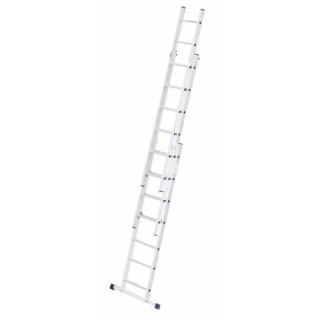
Third, pay attention to the type of ladder. Single-sided ladders are most commonly used in warehouses because they provide stability and safety when working at height. Double-sided or folding ladders are also available, but require more space in the warehouse.
Fourth, pay attention to the maximum load of the ladder. The ladder should be able to support the weight of the person climbing it, but also the weight of the products being transported on it.
In conclusion, the choice of a ladder for a warehouse is very important for the safety of employees and the proper operation of the warehouse. It is worth considering the height of the warehouse, the design of the ladder, the type of ladder and the maximum load. By choosing the right ladder, you can ensure the safety of workers and the effective performance of work at height in the warehouse.

Ladders from PALETEO offer:
ladders
 

See also in our shop: Ladders — how to choose a safe one
Gallery
 drabina-magazynowa

Other articles

  • Plastic parking grid KP4G 60 x 39.5 cm, load capacity 350 t/m²
    24-11-2026

    Which parking grid should you choose? Load capacity, dimensions and pieces per m²: table

    A parking grid is chosen primarily by the load it has to carry: for foot traffic and gardens, grids with a load capacity of approx. 150 t/m² (2.5–3 cm high) are sufficient; for driveways and car parks for passenger cars – 250–350 t/m² (4 cm high); for heavy traffic and the highest axle loads – 450 t/m² grids or 5 cm high models. Depending on the format, you need 2 to 7 grids per m² – the most popular 50 × 50 cm format means 4 pieces per m².

  • Plastic H1 pallet 120x80: pallet weight 18 kg
    17-11-2026

    How much does a pallet weigh? Euro, plastic and H1 pallet weights: table

    A wooden EPAL Euro pallet measuring 1200 × 800 mm weighs approximately 25 kg. A plastic pallet of the same size weighs, depending on its design, from approx. 4.5 kg (a lightweight open-deck export pallet) to approx. 20 kg (closed-deck, reinforced). A hygienic H1 pallet 120 × 80 weighs 18 kg, and 120 × 100 plastic pallets weigh from approx. 6.5 to 23 kg.

  • IBC heating jacket – 1000 l IBC container protected against frost
    10-11-2026

    IBC tank in winter: how to protect an IBC container from frost

    In winter, an IBC tank (1000 l IBC tote) must above all be protected against its contents freezing – water expands by about 9% when it turns to ice, which can crack the drain valve and damage the bottle. An IBC used for rainwater is best emptied before the frosts. An IBC holding process liquids should be stored in a heated building or wrapped in a thermal insulation jacket and – at sub-zero temperatures – a heating jacket with a thermostat.

