PALETEO.com | Warehouse equipment

Categories

Safe meat transport - what should you remember?

Published on: 22-02-2023

Transporting meat is one of the most important stages in the supply chain as it represents the final phase before products reach the customer. We will present a few rules that should be followed.
 
Before starting transportation, make sure that the meat has been properly prepared for transport. This means that the meat should be packed in tight packaging that prevents leaks. Another important aspect is maintaining the appropriate temperature. Temperature is crucial when it comes to transporting meat because it can affect the quality and safety of the product. In the case of ground meat, it should be transported at a temperature below 4 degrees Celsius, while whole meat should be transported at a temperature below 7 degrees Celsius.
 
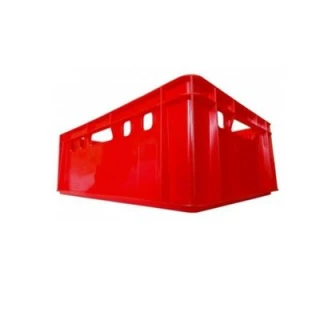
Another important aspect is the proper securing of the transport. Meat transportation can be difficult, especially if the products are transported over long distances. In this case, it is necessary to ensure the appropriate protection of the products to avoid mechanical damage. To do this, it is worth using dedicated packaging such as crates or containers for meat, which will provide appropriate support for the products.
 
It is also important to choose reliable carriers who have experience in transporting meat. The carrier should be aware of all the requirements for food transportation, and should also use appropriate procedures to ensure safe transport.
 
In summary, safe meat transportation requires attention to many aspects such as proper preparation of the products, maintaining the appropriate temperature, appropriate protection of the transport, and choosing the right carrier. Following these rules will help you safely transport meat and maintain its quality.

See also in our shop: Containers for meat storage and transport · Plastic containers · Plastic box pallets
Gallery
 pojemnik-e2

Other articles

  • Plastic parking grid KP4G 60 x 39.5 cm, load capacity 350 t/m²
    24-11-2026

    Which parking grid should you choose? Load capacity, dimensions and pieces per m²: table

    A parking grid is chosen primarily by the load it has to carry: for foot traffic and gardens, grids with a load capacity of approx. 150 t/m² (2.5–3 cm high) are sufficient; for driveways and car parks for passenger cars – 250–350 t/m² (4 cm high); for heavy traffic and the highest axle loads – 450 t/m² grids or 5 cm high models. Depending on the format, you need 2 to 7 grids per m² – the most popular 50 × 50 cm format means 4 pieces per m².

  • Plastic H1 pallet 120x80: pallet weight 18 kg
    17-11-2026

    How much does a pallet weigh? Euro, plastic and H1 pallet weights: table

    A wooden EPAL Euro pallet measuring 1200 × 800 mm weighs approximately 25 kg. A plastic pallet of the same size weighs, depending on its design, from approx. 4.5 kg (a lightweight open-deck export pallet) to approx. 20 kg (closed-deck, reinforced). A hygienic H1 pallet 120 × 80 weighs 18 kg, and 120 × 100 plastic pallets weigh from approx. 6.5 to 23 kg.

  • IBC heating jacket – 1000 l IBC container protected against frost
    10-11-2026

    IBC tank in winter: how to protect an IBC container from frost

    In winter, an IBC tank (1000 l IBC tote) must above all be protected against its contents freezing – water expands by about 9% when it turns to ice, which can crack the drain valve and damage the bottle. An IBC used for rainwater is best emptied before the frosts. An IBC holding process liquids should be stored in a heated building or wrapped in a thermal insulation jacket and – at sub-zero temperatures – a heating jacket with a thermostat.

