
Above-ground or underground rainwater tanks – how to choose
Published on: 05-03-2021
Rainwater harvesting is not only a new eco-friendly fad, but also a way to reduce bills. A large water tank can be very helpful when watering the garden or even flushing the toilet.
The incurred cost of buying and installing a tank can pay for itself the same year. There are many rainwater tanks available on the market, both above-ground and underground.
Underground tanks have a very large capacity, starting from 2000l, often such tanks can be combined with each other, taking a modular formula. If we planned to use rainwater, not only for watering the garden, it is worth remembering to install special filters and sensors.
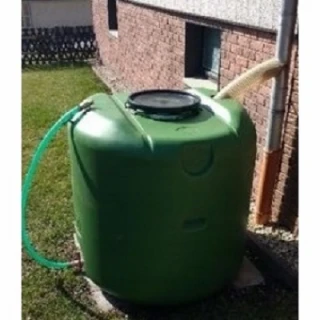
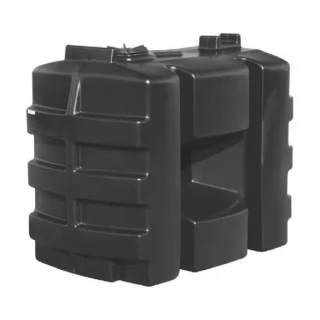
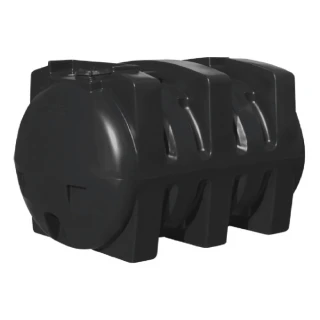
Above-ground tanks have much smaller volumes and can be more easily installed, hooked up to the gutter. Above-ground containers are available from a volume of 200l, but to collect water relatively sufficient we should think about a minimum tank of 1000l.
At times of the heaviest rainfall, we can only collect a portion of the rainwater. The real amount of water collected during the year is about 60% of the rainfall. In the case of a 200m2 roof, we can collect this gives 72 m3 of rainwater. The average price of piped water is about 5,50 PLN/m3. So in a year we are able to save about 400 PLN, and this is already a significant amount to save.
It is important to remember that both aboveground and underground rainwater container should not be made of metal. Rainwater can contain an acidic reaction that promotes corrosion, which can result in water contamination. Therefore, the best solution will be to purchase a product made of plastic.
See product: rainwater tanks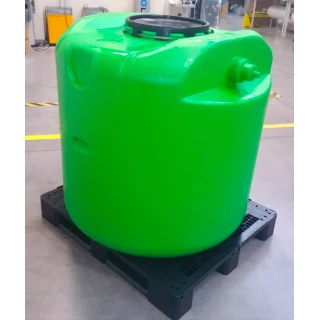
Other articles
-

24-11-2026 Which parking grid should you choose? Load capacity, dimensions and pieces per m²: table
A parking grid is chosen primarily by the load it has to carry: for foot traffic and gardens, grids with a load capacity of approx. 150 t/m² (2.5–3 cm high) are sufficient; for driveways and car parks for passenger cars – 250–350 t/m² (4 cm high); for heavy traffic and the highest axle loads – 450 t/m² grids or 5 cm high models. Depending on the format, you need 2 to 7 grids per m² – the most popular 50 × 50 cm format means 4 pieces per m².
-

17-11-2026 How much does a pallet weigh? Euro, plastic and H1 pallet weights: table
A wooden EPAL Euro pallet measuring 1200 × 800 mm weighs approximately 25 kg. A plastic pallet of the same size weighs, depending on its design, from approx. 4.5 kg (a lightweight open-deck export pallet) to approx. 20 kg (closed-deck, reinforced). A hygienic H1 pallet 120 × 80 weighs 18 kg, and 120 × 100 plastic pallets weigh from approx. 6.5 to 23 kg.
-

10-11-2026 IBC tank in winter: how to protect an IBC container from frost
In winter, an IBC tank (1000 l IBC tote) must above all be protected against its contents freezing – water expands by about 9% when it turns to ice, which can crack the drain valve and damage the bottle. An IBC used for rainwater is best emptied before the frosts. An IBC holding process liquids should be stored in a heated building or wrapped in a thermal insulation jacket and – at sub-zero temperatures – a heating jacket with a thermostat.